
Contact
Primary contact: Tatsuya Osaki
Email: tosaki@iu.edu
Phone: 8572962130
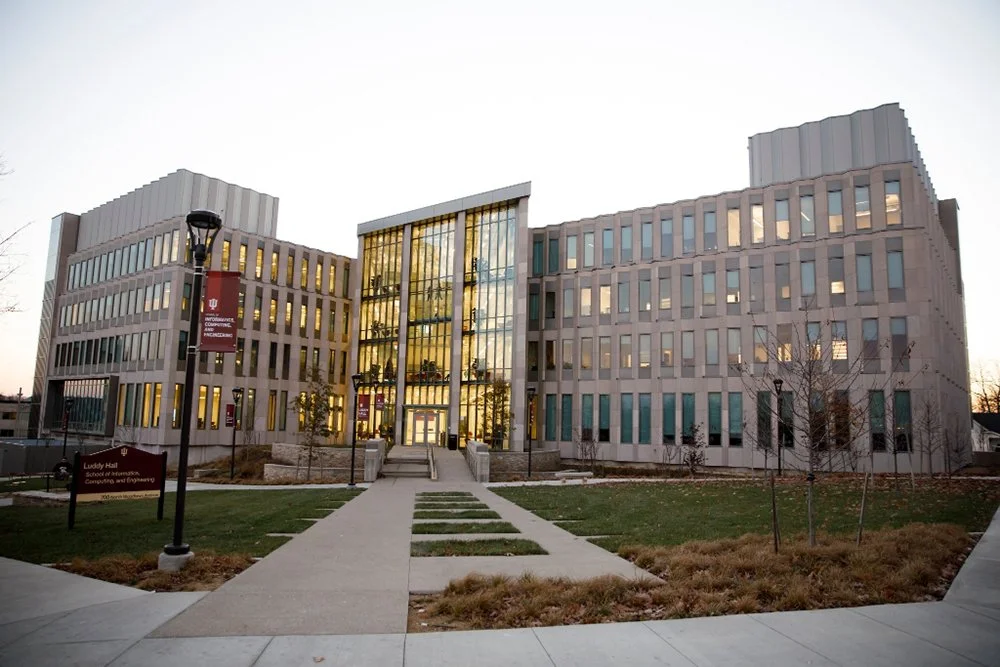
Address: 700 N Luddy Hall, Bloomington, Indiana
General openings
We are always looking for great people to join us.
Graduate students from any department. Our lab has hosted thesis research for Master and PhD program in Luddy School of Informatics, Computing, and Engineering at Department of Intelligent Systems Engineering. Ph.D. may students receive financial support that helps them concentrate on their studies and research. Support often comes through student academic appointments (SAAs), such as associate instructorships or research assistantships. In addition, we also accept the student for Biomedical Engineering program at Indiana University, Indianapolis. Please check the program websites for more details and contact Dr. Osaki via email directly. Please include "Tanuki" in the subject line.
Postdoctoral candidates are encouraged to email Dr. Osaki a CV, a cover letter describing past research and future research goals, and contact information of three references. We actively support fellowship applications (such as HFSP Postdoctoral Fellowships, EMBO Postdoctoral Fellowships, JSPS Overseas Research Fellowships: EN/JP). Please include "Tanuki" in the subject line.
Undergraduate students who are interested in research should contact Dr. Osaki to discuss UROP opportunities.
Strategies for Contributing to Science in the Osaki Lab
We believe that understanding the human brain requires understanding how it communicates within the brain and the body and how these interactions shape development and function among neurons, vascular systems, and other tissues, through communication that unfolds across molecular, cellular, and functional levels. Yet, capturing this complexity in a controlled and experimentally accessible way remains a fundamental challenge in neuroscience.
We approach this challenge through engineering. By combining human stem cell biology, tissue engineering, microfluidics, and advanced multi-photon imaging, we build microphysiological systems that reconstruct key aspects of human brain development and to understand fundamental principle for learning and memory in human brain. These engineered living system allow us to observe how human biological systems develop, communicate, and respond to perturbations in ways that are difficult to access in conventional models.
Our goal is not simply to reproduce human tissues in miniature, but to create new ways of asking questions about human biology. By connecting engineered models with molecular analysis and functional measurements, we seek to uncover the mechanisms underlying neuromuscular and neurodevelopmental disorders and identify new therapeutic strategies to restore function.